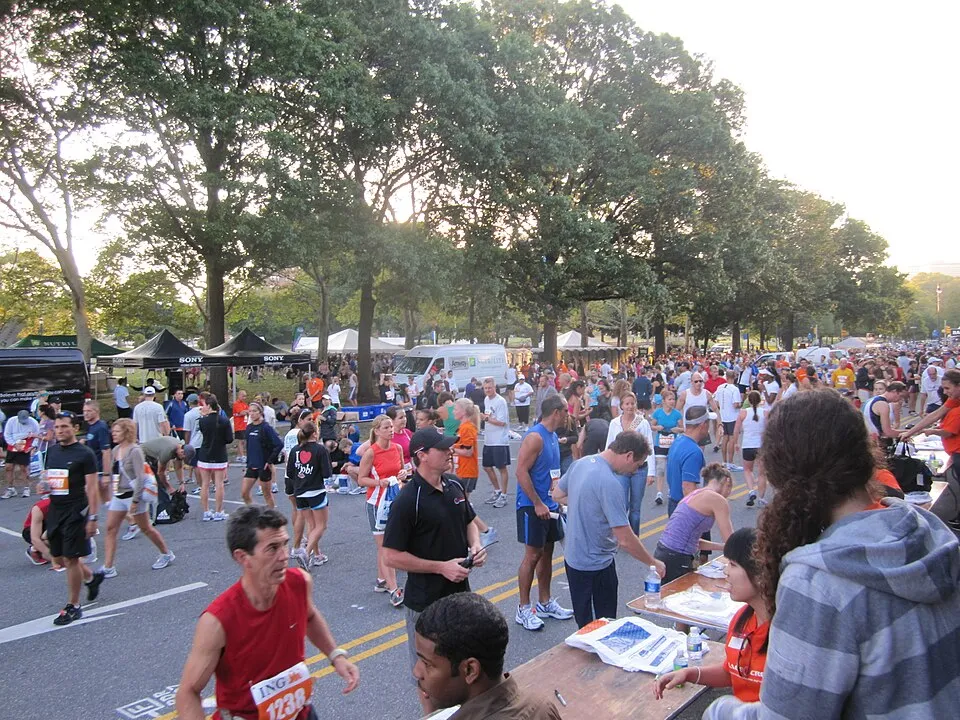
AACR Philadelphia Marathon
Philadelphia, United States of America · Thursday 19 November 2026
This race suits runners who want a straightforward marathon experience without surprises. With only 184 meters of elevation gain spread across the full distance, you're looking at a course that stays relatively flat with gentle rolling sections. It's the kind of race where pacing discipline and aerobic fitness matter more than hill strength, making it appealing to those chasing time goals or running their first marathon. Trail surface runners will appreciate the change from road pounding, and the low elevation profile means you can focus on running rather than managing steep climbs and descents. Trail running introduces its own demands. The surface will be more demanding on stabilizer muscles and your joints will work differently than on pavement. If you've trained exclusively on roads, you might feel the adjustment in your legs and feet by mile twenty. The course delivers what it promises, but there's a practical reality to acknowledge. The scraped website content doesn't provide details about specific terrain, water station locations, aid availability, or the actual trail conditions you'll encounter. That's a significant gap when you're planning a full marathon effort. You'll want to seek out course preview videos or talk to previous finishers to understand whether you're dealing with packed dirt, technical root systems, rocky sections, or something more benign. The flat profile is genuinely helpful for marathon racing, but trail running always carries the risk of root catches, uneven footing, and slower paces than equivalent road efforts. Come prepared with appropriate trail shoes, practice your footing on uneven ground during training, and don't assume your road marathon pace translates directly to these conditions.
Difficulty Calculator
h
:m
:s
Adjusted Time
4:02:07
Time difference: +2.1 minutes compared to a flat, road, temperate course.
Course Details
Elevation Gain184m
Elevation High42m
Elevation Low2m
How hard is AACR Philadelphia Marathon?
Moderateharder than 46% of marathons
Flattest / easiestHardest
On our difficulty model, AACR Philadelphia Marathon plays about 6 minutes slower than an average road marathon for a 3:30 runner. It ranks #619 hardest of 1151 marathons we analyse, and #332 of 576 in United States of America. Use the calculator above to see the exact adjusted time for your own goal pace.
What will you run at AACR Philadelphia Marathon?
Estimated finish times on this course versus the same effort on an average road marathon, based on its elevation, surface, and expected race-day temperature.
| Average-course time | On AACR Philadelphia Marathon | Difference |
|---|---|---|
| 3:00:00 | 2:59:16 | −00:44 |
| 3:30:00 | 3:30:37 | +00:37 |
| 4:00:00 | 4:02:07 | +02:07 |
| 4:30:00 | 4:33:43 | +03:43 |
| 5:00:00 | 5:05:26 | +05:26 |
| 5:30:00 | 5:37:16 | +07:16 |
| 6:00:00 | 6:09:12 | +09:12 |
Use the calculator above for your exact goal time. Want a prediction from your own training? Try the marathon time predictor.
AACR Philadelphia Marathon 2026 Course Analysis
AACR Philadelphia Marathon is a full marathon held in Philadelphia, United States of America. It is scheduled for Thursday 19 November 2026. The course is run on road surface with 184m of total climbing, with its high point near 42m above sea level. For registration and full race details, visit the official AACR Philadelphia Marathon website.
Elevation Profile
With 184m of total climbing, this is a gently undulating course. The elevation changes are manageable for most runners and shouldn't greatly affect your pacing.
Surface Type: Road
AACR Philadelphia Marathon is run on road surfaces, which provide the fastest and most predictable conditions for racing. Road courses allow for consistent pacing and are typically the best choice for a personal best.
Looking for an easier marathon or a tougher challenge? You can also compare AACR Philadelphia Marathon against other marathons to find the right race for your goals.
Marathons of similar difficulty
If AACR Philadelphia Marathon fits your goal, these courses play out about the same on our difficulty model.
Other Marathons in United States of America
Garmin Kansas City Marathon
Kansas City, United States of America
Road308m gainOct 2026
Blue Sky Marathon
Fort Collins, United States of America
Road1064m gainOct 2026
Mankato Marathon
Mankato, United States of America
Trail277m gainOct 2026
Jackson Hole Marathon
Jackson, United States of America
Trail173m gainOct 2026
Cannonball Marathon
Greensboro, United States of America
Road0m gainOct 2026
Baltimore Marathon
Baltimore, United States of America
Road298m gainOct 2026